
RAIZ
'On the paradoxical nature of one's roots and their cultural heritage'
Première: 20 November 2025
ODEON Zwolle
Tour: November 2025 - May 2026
Concept, choreography, performance, light, decor and costumes: Samir Calixto
Assistant to the choreographer (staging phase): Jeanne Hensinger
Head technicians/ tour: Joost Smit and Ted Maree
RAIZ is a co-production of Matter Affects (NL), Zwolse Theaters (NL), Schouwburg De Lawei (NL), Rabo Theater De Meenthe (NL),
and Scenario Pubblico (IT).
Special thanks to Theatergroep De Jonge Honden (NL) and Núcleo Artístico Virginia Úngari (BR)
Supported by Performing Art Funds NL (FPK), city of Zwolle and
the province of Overijssel
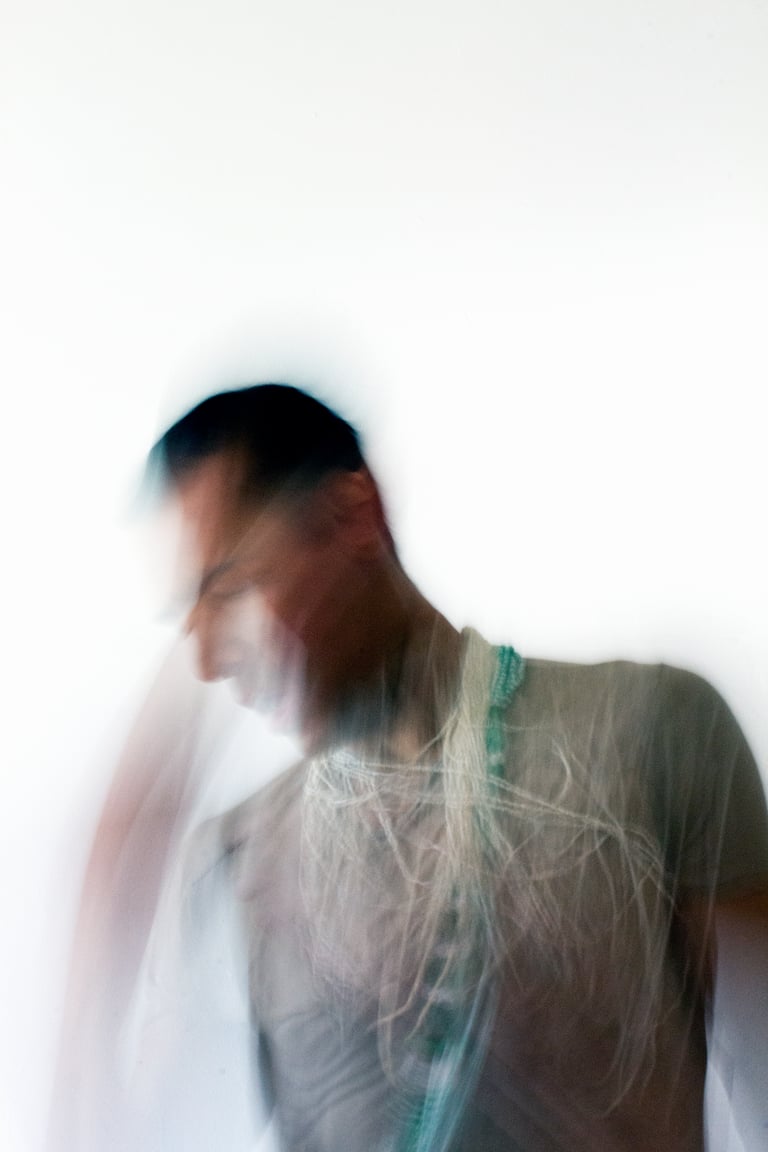
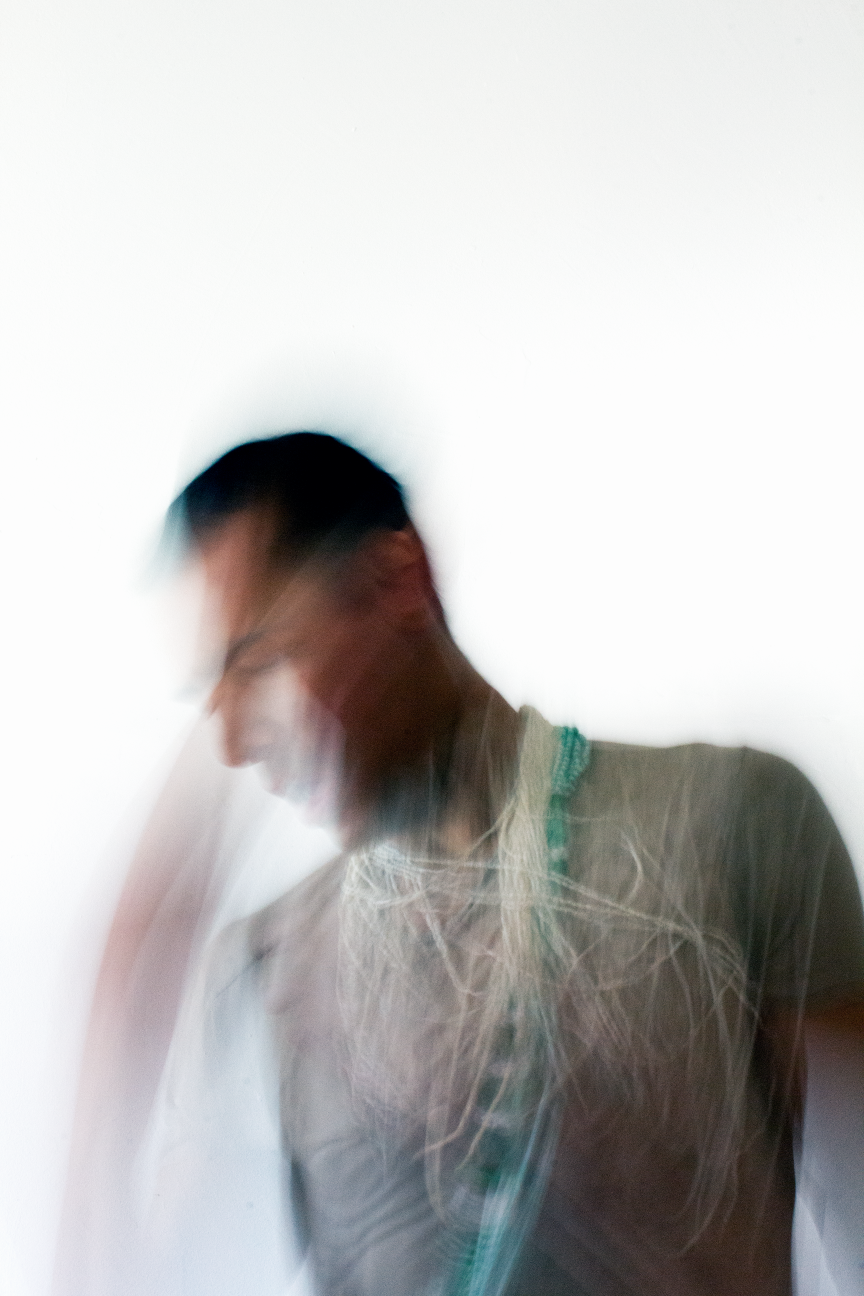
RAIZ
Samir Calixto's work is often associated with incorporating iconic works from the Western cultural tradition in his contemporary dance pieces. As an artist born and raised in Brazil, many have found it curious that this background is often not so clearly visible in his creations.
However, Calixto sees it differently: it is thanks to his cultural heritage that his works are filled with a vibration and sense of urgency that often serve as a friction point for the subjects under investigation. It is by reflecting on this friction that the choreographer presents RAIZ ('root' in Portuguese) , a solo performance in which he travels the path from his origins to its intersection with what is considered European high culture - but nevertheless is the reflection and digestion of Europe's own heritage.
As a small child, Calixto grew up participating in Afro-rituals in his native Brazil, sessions in which music and movement were used as a connection to ancestral elements that could reconnect people with their deepest origins - something that is far removed from today's hedonism. It was in these 'seances' that many of his roots were laid, and also when the seeds were sown for his deep relationship with dance.
It was also then that a wealth of rhythms and sounds made their appearance and contributed to the formation of his artistic identity. Later, the choreographer saw his path crossed by many other influences, but none had as much impact in his life as the connection he found with Western classical music - thanks to his studies as a classical singer, bringing him in contact with works that spoke directly to the universality of human experience.
It is precisely in this paradox that RAIZ will focus: on how a Brazilian artist creates in a context radically different from his original one, incorporating his own roots into what are seemingly very opposite realities. In this process the choreographer finds a crossroads where artistic expression is nothing but an experience that reveals the intricacies of human nature within cultural differences. It is by understanding his own heritage and myths, and relating them to others - whether through umbanda (a folk religion practiced in South America - especially Brazil - and based on traditional African religious practices, modified by elements of Roman Catholicism and spiritualism) or Schubert - that Calixto once again searches for the universality of our human experience, as throughout his entire oeuvre.
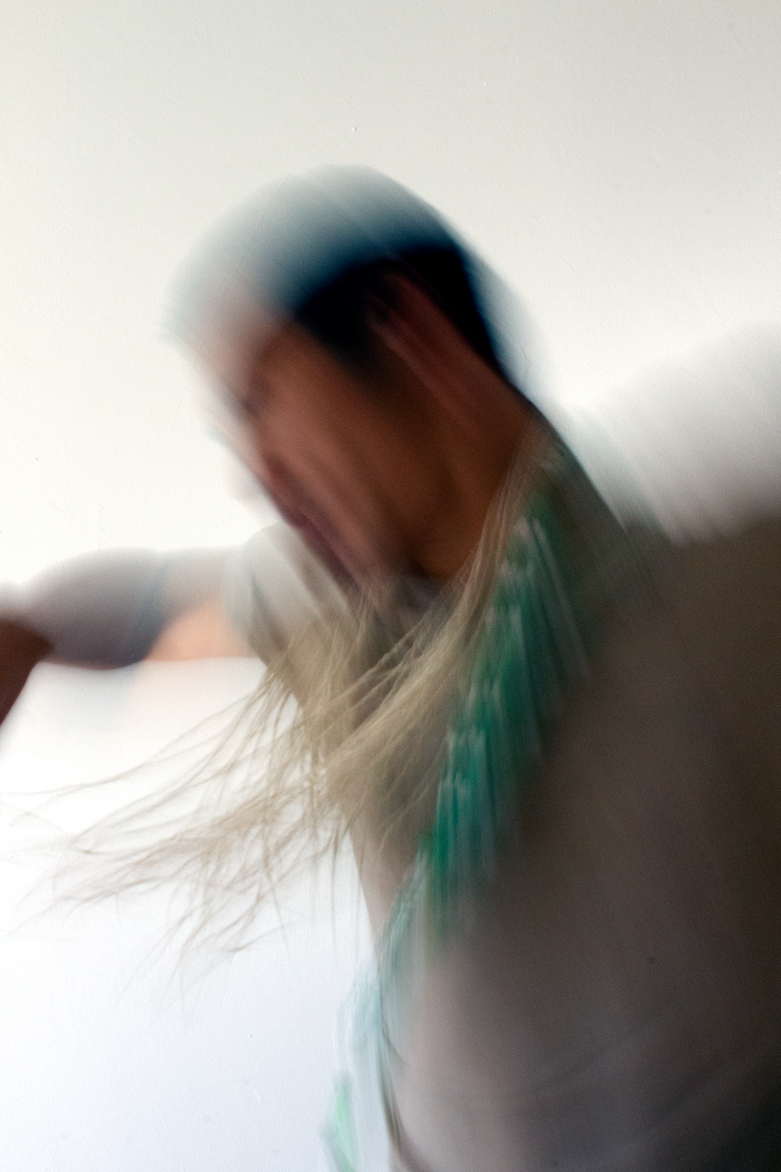
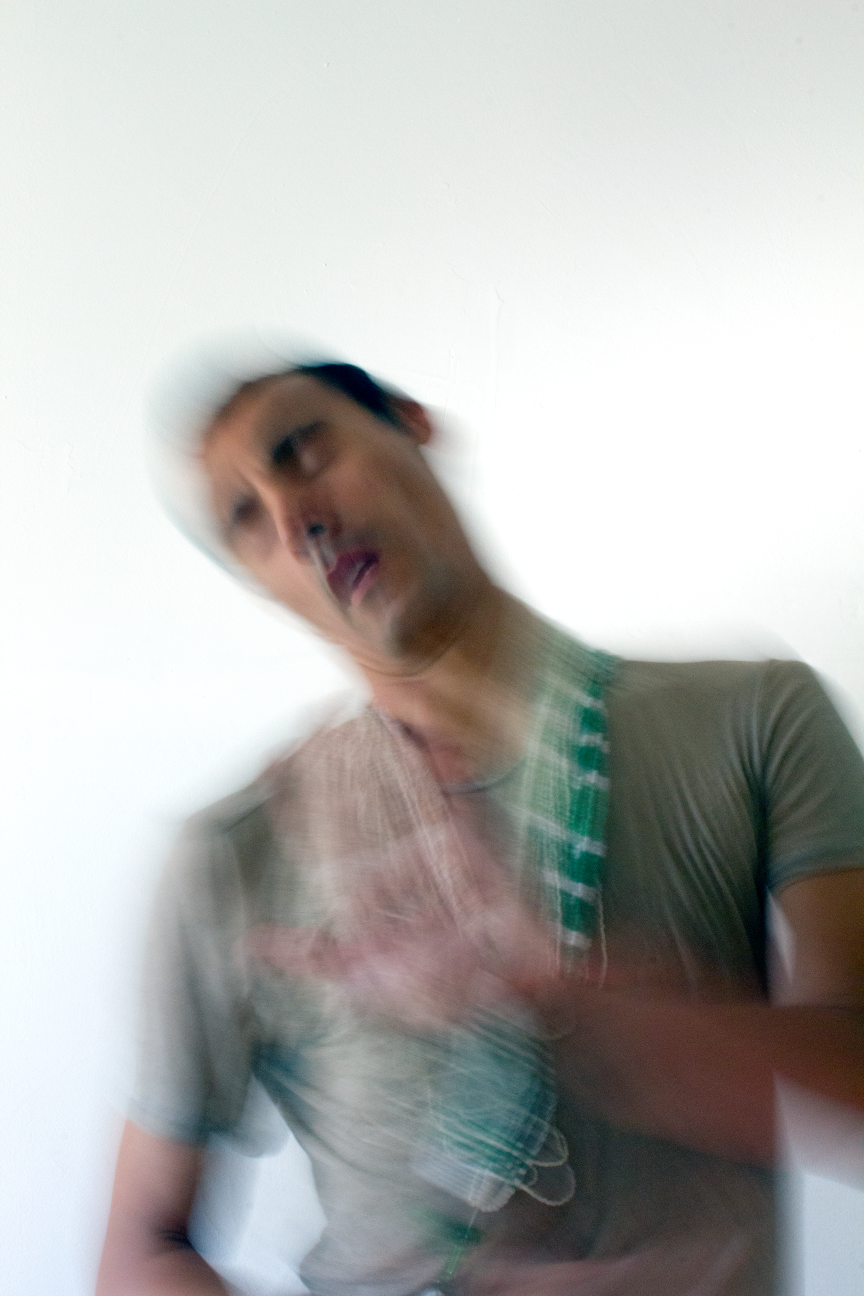
In RAIZ Calixto himself will embody this physical journey in which our roots are a starting point for understanding what makes us what we are and, contrary to what some may think, can work as a unifying force towards others rather than a factor of division.
ABOUT THE PERFORMANCE
'In 'RAIZ', choreographer and dancer Samir Calixto dances with complete abandon, to the very source of being (...)
For the dance performance RAIZ, Samir Calixto revisits his Brazilian roots for the first time. The movements and rhythms plunge him into a vulnerable trance (...) The rapture seems to lead him to the source of being. A source intimately intertwined with nature, a place where life energy can be found.'
'The performance contains a beautiful development that emerges in various ways. (...) The convergence of worlds is also visible in the choreography. Much of it feels unfamiliar and abstract, but there are also sections in which more classical Western dance patterns come to the fore. The few moments of calm serve their purpose in the show and do not feel forced, ensuring that the show remains a cohesive whole. (...) It is an impressive story of constant development, searching, and vulnerability.'
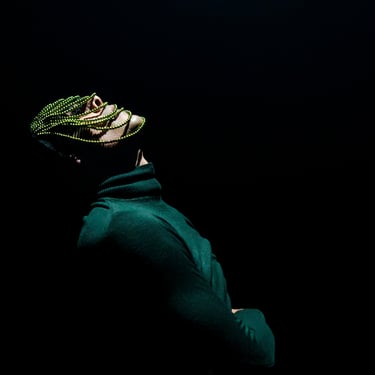
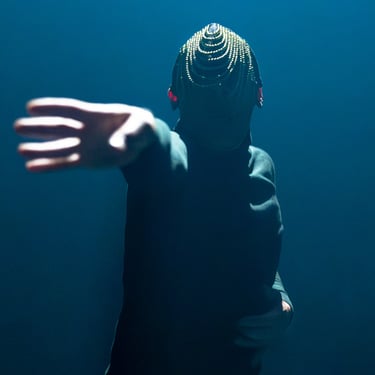
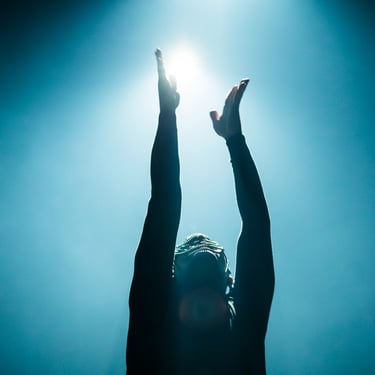
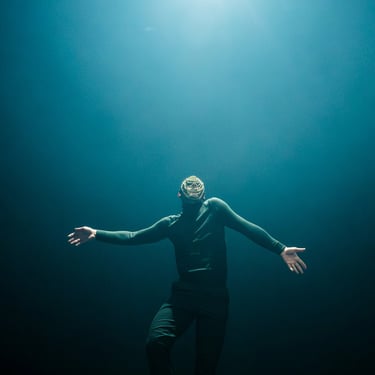
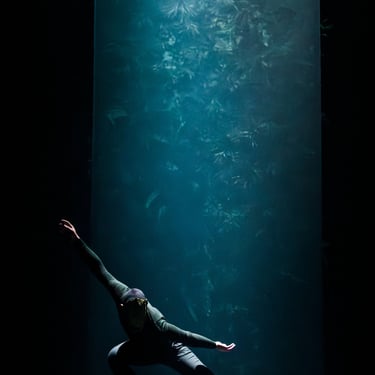
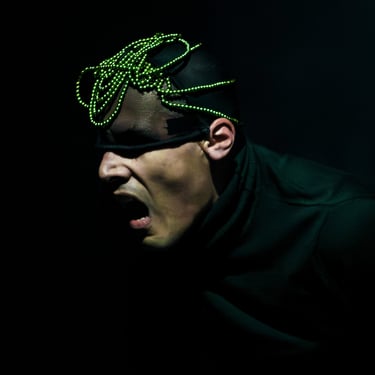
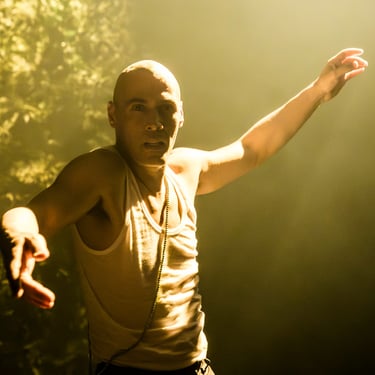
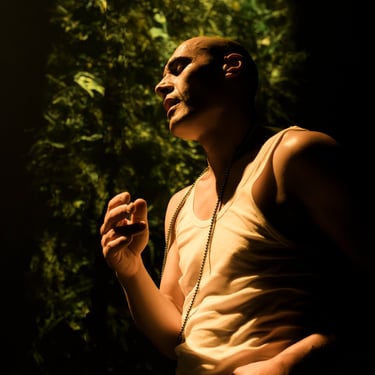
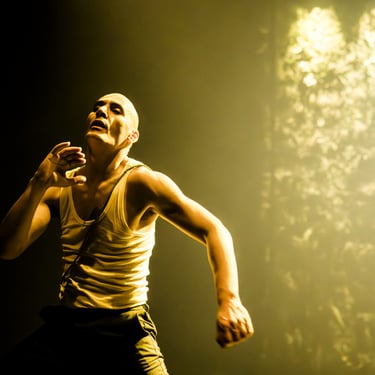
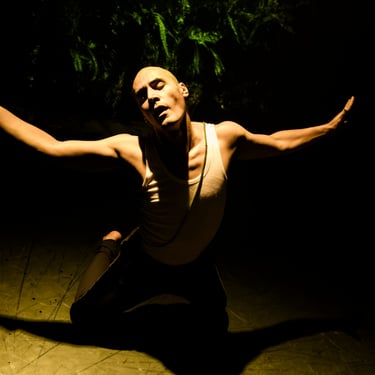
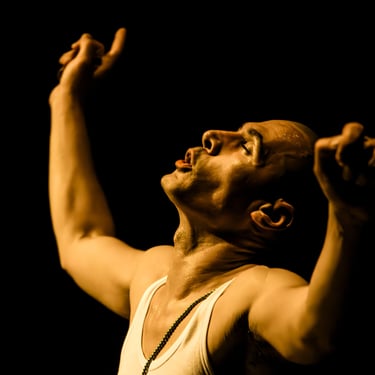
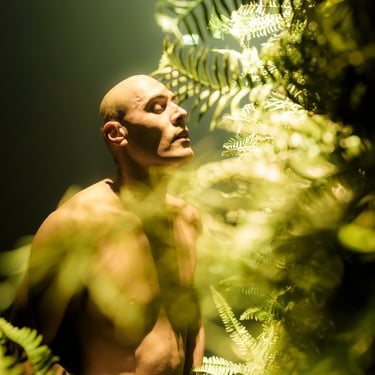
© Joris-Jan Bos


The roots are nowhere. And everywhere.
Program text by Samir Calixto
Recently, during one of my encounters with our cherished Resonance Group* in Zwolle, I shared my experiences from the Brazilian artistic residency for this piece. Then the question was raised: could I reconnect to my roots back in my homeland? Has anything changed regarding my relationship to the country where I was born? After a long pause, my answer was rather resolute: the essence of what I found there can be found anywhere else. It is a matter of vibration. It is amidst the exotic forests of Ilhabela, a natural sanctuary in Brazil’s southeastern coast where the residency took place, or in the woods surrounding Steenwijk, where I am recently renewing my love for The Netherlands and its nature. It is not about a place. It is a connection that happens in an extra-physical dimension. It requires some detachment from the pre-conceived ideas about nationality. It dares us to strip out from a certain nationalistic sentiment, manifested sometimes through an often inoffensive pride for our traditions, but often also through less noble expressions, manifesting itself through absurd motives of war, xenophobia and what not.
‘Pátria é acaso de migrações e do pão-nosso onde Deus der…’
(Homeland is all but a matter of migration and our daily bread, wherever God provides it…)
Wrote Mário de Andrade, one of Brazil’s greatest poets.
With this said, I openly look back at my memories as a child in Brazil, witnessing people giving themselves entirely to the service of invisible forces during the rituals of Umbanda – an Afro-Brazilian spiritual doctrine practised by millions in the country, recently targeted by the terrible fundamentalism which has been plaguing the country (and the world). The main goal of Umbanda is charity, to help others not only with their daily necessities, but with time, prayer, advice, and acts of love. People from a humble background and often challenging life conditions still find time and motivation to put themselves at the service of others. A lesson I still try to learn. In these rituals, there is an intricate hierarchy of ‘orixás’ and their ‘entitities’, believed to be spirits working to aid people and their evolution. Apart from this noble aim, what has always fascinated me is that these so called spirits are all manifestations of natural forces. They represent the elements constituting our seas, our lands, our rivers, our forests. There I could find the connection to something truly universal, opening a dialogue with many other world mythologies.It transcends one culture, as it binds us in the search for answers about our relationship to the invisible and therefore revealing aspects of our human nature.
In this process, I also discovered which of these manifestations speaks closer to my soul. So it happens that it is in the density of the forests, in deep jungles, their inhabitants and all that they encompass that I find my home. It is the tune to which my soul vibrates. In Umbanda, just like in many other spiritual traditions, the vegetal world holds the key to universal knowledge, coded in the silent intelligence of all plants. So, considering myself a seeker, I find in there a correspondence to my essence, and the key to my growth and service to the world.
My roots are there, anywhere. Everywhere.
Thus, while in the performance you will see tonight there are many codes and elements from traditions directly connected to my birth place, they are just a gateway to something wider in scope. This is not a work about Brazilian
culture and its assumed exoticism. It is about how a personal look into one’s culture opens door to something universal, beyond artificially made geographic boundaries. The music you will listen are ‘pontos de caboclo’ –sacred chants dedicated to the spirits who once lived in the forests and knew all their secrets, now serving mankind from another realm. These sounds are a departure point to rescue a bit of my childhood experience, but at the same time to contemplate on the power and vulnerability of our nature everywhere. Vulnerable because it is crying. It is a power that, paradoxically, has been so threatened around the globe for all the socio-political reasons we are daily faced with, when we dare to look.
Reclaiming this connection has become a matter of survival.
Thank you for being here tonight.
Salve o povo da floresta. Salve a linha do conhecimento.
Okê, Caboclo!
(Hail the people of the forest. Hail the knowledge thread.)
Samir Calixto
* Our Resonance Group is an open discussion group born in collaboration with the Zwolse Theaters, as a way to narrow
the contact between creator and audience, through an exchange in which members of the public 'resonate' on the
artistic propositions of a performance in its various stages of creation.
More information on matteraffects.com/sharing